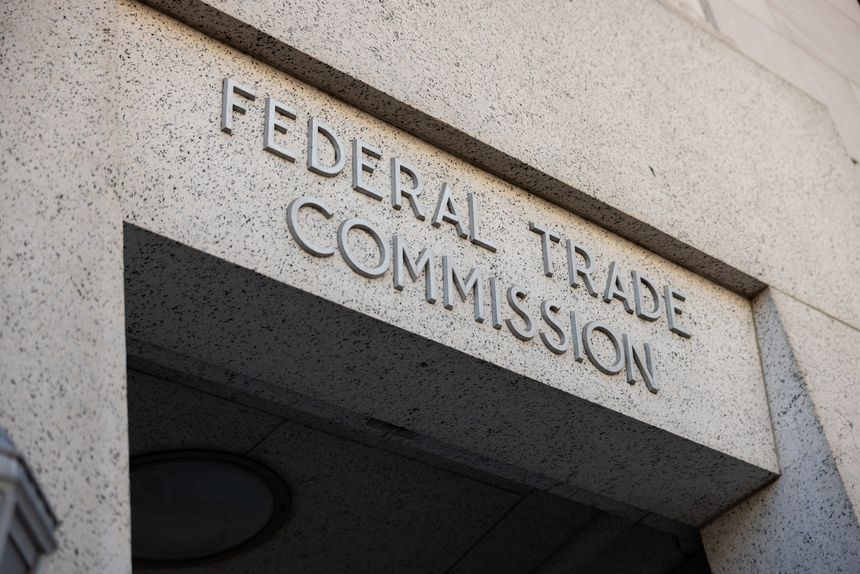


The Federal Trade Commission (FTC) recently released its agenda for a workshop the agency is hosting on January 28, 2026, focused on age verification and estimation – or more broadly, “age assurance” mechanisms. Specifically, the workshop will be exploring the practical implementation of age assurance tools and the interplay with current U.S. laws and regulations.
What is Age Assurance?
Age assurance is a broad umbrella with a few different contours. For example, age verification generally means confirming a user’s age using identifiers, like a government ID, credit card, or social security number. Age estimation, on the other hand, may use certain technical signals, such as AI-driven facial analysis, to predict a user’s age without requiring a formal document. Based on the agenda, the FTC’s workshop will cover the various age assurance methods and tools currently used and how these are implemented at scale.
Much of the issues relating to children’s online safety have been focused within the video game industry, where children’s access, in-game communications, and data collection have consistently been front of mind. The risks, however, extend well beyond video games. Companies with products or content, from mobile apps to social media platforms, that have children present should be paying attention.
Why Is Legislation Failing?
We need to first distinguish between children’s privacy and children’s online safety. While the two often overlap, they address different concerns. Privacy focuses on the collection and use of data, while safety focuses on the content children encounter and the interactions they have. Because online safety regulations often require platforms to monitor or restrict access to protected speech, they run headlong into the First Amendment.
We’ve seen this play out across the country in various examples, like:
- California’s Age-Appropriate Design Code was enjoined in September 2023 due to the invasiveness of age estimation that the law would have required, violating the First Amendment.
- Most recently, the Texas App Store Accountability Act was blocked on December 23, 2025 on the same First Amendment grounds. The Court analogized that the Texas Act was like “a law that would require every bookstore to verify the age of every customer at the door and, for minors, require parental consent before the child or teen could enter and again when they try to purchase a book.”
The workshop agenda underscores the growing importance of children’s online safety, and the FTC won’t be discussing age assurance in the abstract. This workshop will examine specific, existing tools, how they’re deployed at scale, and how they fit within current law. The panels will focus on real-world age assurance technologies, operational deployment by major platforms, and the regulatory tradeoffs involved. Big tech and ecosystem players are part of the discussion, giving the FTC ready-made benchmarks for what it may later view as “reasonable” safeguards.
The Takeaway
The current landscape of children’s online safety can be complicated. The common-sense answer that most can agree on is children should have some form of online protections, but the tension here is what that looks like in practice. As legislatures find it difficult to craft laws that can survive First Amendment scrutiny, the private sector is moving ahead. Many companies – particularly those in the games industry – have already adopted age assurance technologies as a voluntary step toward improving children's safety.
The FTC's January 28 workshop is a signal that while U.S. laws may be stalled by courts, the conversation around online safety is moving forward, with or without clear statutory requirements.
/Passle/644c41cc474c4c94b77327c8/SearchServiceImages/2026-10-01-22-08-16-853-6abed9d0d6512e8c9b7ad0e9.jpg)
/Passle/644c41cc474c4c94b77327c8/SearchServiceImages/2026-10-01-01-21-33-675-6abdb59d9e010dd7f474bd1d.jpg)
/Passle/644c41cc474c4c94b77327c8/SearchServiceImages/2026-09-09-04-48-18-909-6aa0e512414b094d694c464a.jpg)
/Passle/644c41cc474c4c94b77327c8/MediaLibrary/Images/6373fcf4f636e919680b254a/2024-02-12-23-06-45-859-65caa4857f5a53a7bf1fc7df.jpg)


